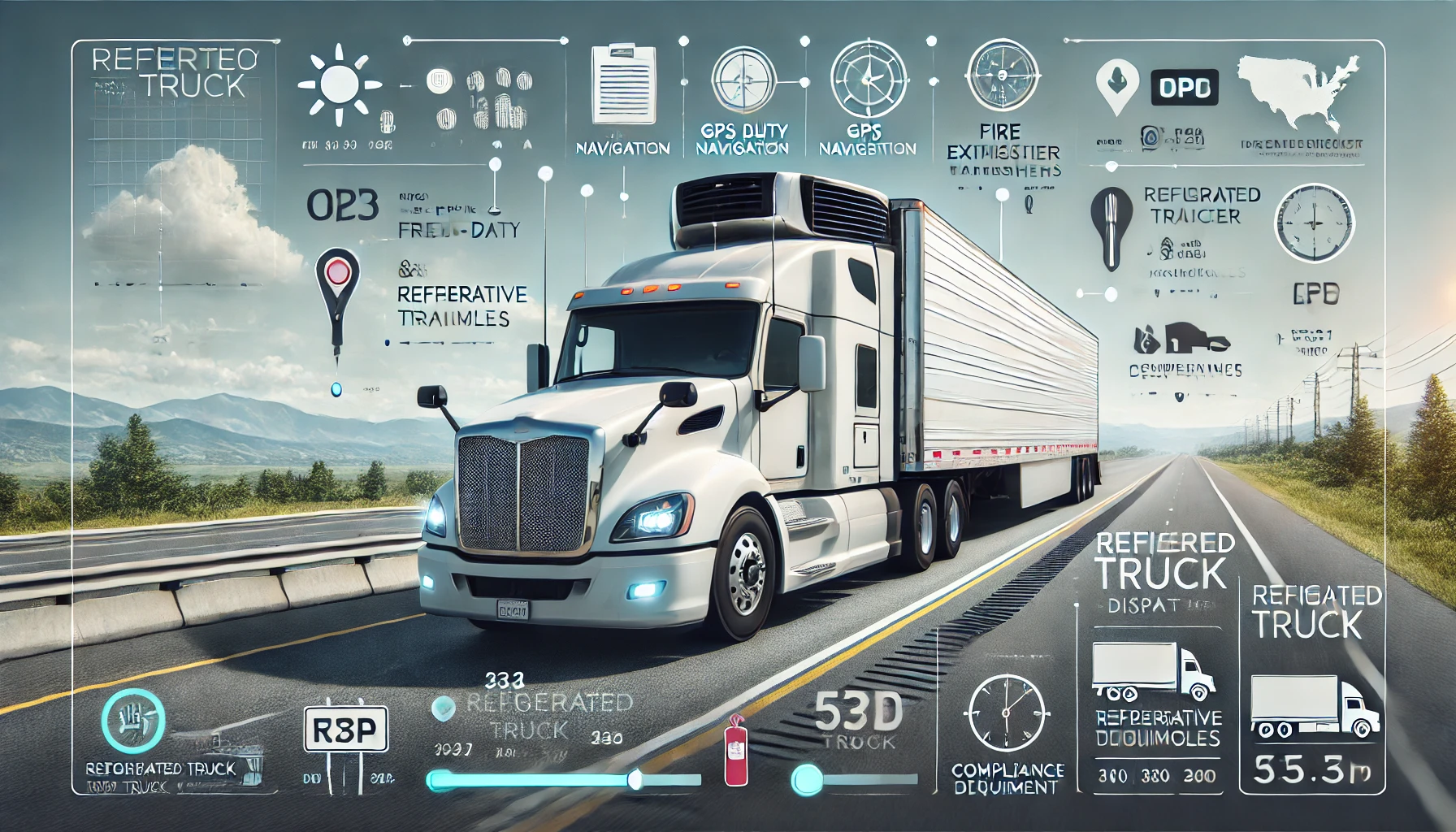
Essential Equipment for Reefer Truck Dispatch in the USA: Operating a reefer truck in the USA comes with unique challenges, especially when it comes to hauling perishable goods that require precise temperature control. To ensure smooth operations, reefer truck drivers need specific equipment that covers everything from the truck and trailer setup to safety gear and legal compliance. In this blog, we will break down the essential equipment required for reefer truck dispatch to help you remain compliant, efficient, and safe on the road.
Whether you are a seasoned driver or just starting out, having the right tools and equipment can make or break your success in the reefer trucking industry. Read on to discover what you need to operate a reefer truck effectively and keep your business running smoothly.
Table of Contents:
- Truck and Trailer Equipment for Reefer Truck Dispatch
- Safety Equipment for Reefer Truck Drivers
- Compliance and Legal Equipment for Reefer Trucking
- Navigation and Communication Tools for Reefer Truck Dispatch
- Load and Unload Equipment for Reefer Trucking
- Miscellaneous Equipment for a Smooth Reefer Trucking Experience
Truck and Trailer Equipment for Reefer Truck Dispatch
The most critical component of reefer trucking is the truck and trailer setup. To transport temperature-sensitive goods like food, pharmaceuticals, or medical supplies, your equipment must be up to the task.
Essential Truck and Trailer Setup:
- Refrigerated Trailer (Reefer Trailer): This is the backbone of your operation. A reefer trailer is designed to keep goods at a specific temperature, typically between -20°F and 70°F, depending on what you’re hauling. Modern reefer units come with temperature monitoring systems to maintain product integrity.
- Truck: Most drivers use a heavy-duty truck capable of pulling a refrigerated trailer. Trucks like the Freightliner Cascadia or Kenworth T680 are commonly used for reefer trucking due to their reliability, fuel efficiency, and towing capacity.
- Temperature Monitoring System: Having an advanced monitoring system that allows real-time tracking of trailer temperature is essential. This not only ensures compliance but also gives you and your clients peace of mind knowing the cargo is safe.
Your reefer truck and trailer equipment must be well-maintained to avoid costly breakdowns and ensure that perishable goods are delivered on time and in perfect condition.
Safety Equipment for Reefer Truck Drivers
Safety is paramount in reefer truck dispatch. In addition to handling refrigerated goods, you need to make sure your truck is equipped with the necessary safety gear to protect yourself and others on the road.
Key Safety Equipment:
- Fire Extinguisher: This is a legal requirement and should be easily accessible in your cab. Reefer trucks, like all commercial vehicles, must have a fully charged fire extinguisher onboard.
- Emergency Reflective Triangles: Always carry at least three reflective triangles to set up in case your truck breaks down or you are involved in an accident.
- First Aid Kit: A well-stocked first aid kit is crucial for handling minor injuries while on the road.
- High-Visibility Vests: Wearing a high-visibility vest when outside your truck ensures you are visible to other drivers, especially when loading, unloading, or dealing with roadside emergencies.
- Wheel Chocks: Use wheel chocks to prevent your truck from rolling during the loading and unloading process.
Equipping your truck with these safety tools ensures you remain compliant with Department of Transportation (DOT) regulations and helps keep you prepared for any emergencies.
Compliance and Legal Equipment for Reefer Trucking
Staying compliant with federal and state laws is essential to operate a reefer truck. Compliance and legal equipment help ensure that you avoid penalties and keep your business running smoothly.
Compliance Must-Haves:
- DOT and MC Numbers: Your reefer truck must display Department of Transportation (DOT) and Motor Carrier (MC) numbers if you’re operating a commercial vehicle. These numbers signify that your truck meets federal safety and operational standards.
- Electronic Logging Device (ELD): Federal regulations require reefer truck drivers to track their hours of service (HOS) with an ELD. Devices like KeepTruckin or Garmin eLog ensure that you stay compliant and help you avoid fines for exceeding legal driving limits.
- Commercial Driver’s License (CDL): For reefer trucking, you must have a CDL, particularly if you’re transporting goods across state lines and hauling a combined weight over 26,001 lbs.
- Insurance Documentation: Carry proof of your liability insurance, cargo insurance, and reefer breakdown coverage to protect your business in case of accidents, cargo loss, or equipment failure.
- IFTA Stickers: If you’re traveling between states, International Fuel Tax Agreement (IFTA) stickers are mandatory. They ensure that your fuel taxes are correctly accounted for across state lines.
Ensuring your truck is equipped with the necessary compliance tools will help you avoid costly fines and keep your operation running smoothly.
Navigation and Communication Tools for Reefer Truck Dispatch
Effective navigation and communication tools are vital to keeping your reefer truck dispatch on schedule. With perishable goods, even a minor delay can result in a significant loss, making it important to stay connected and follow optimized routes.
Must-Have Navigation and Communication Tools:
- Truck GPS System: A truck-specific GPS system, such as those from Garmin or Rand McNally, will help you navigate routes optimized for the size and weight of your reefer truck, preventing you from taking restricted roads or getting stuck.
- Temperature Tracking System: Modern reefer trailers are equipped with real-time temperature tracking systems that alert you to any temperature changes. Some even offer mobile notifications, allowing you to make adjustments remotely.
- Smartphone or Tablet: A smartphone or tablet is essential for staying connected with dispatchers, receiving real-time updates, and managing load assignments.
- CB Radio: Despite advancements in mobile technology, a CB radio remains an important tool for communication, especially in areas with limited cell service.
- Backup Camera: Installing a backup camera helps with maneuvering the trailer in tight spaces, ensuring safety during loading and unloading.
These tools ensure that your deliveries are on time and that you can effectively communicate with dispatchers and clients while on the road.
Load and Unload Equipment for Reefer Trucking
Proper loading and unloading practices are essential for reefer truck drivers. Using the right load and unload equipment helps prevent damage to cargo and ensures the goods remain at the required temperature.
Essential Load and Unload Equipment:
- Cargo Straps and Binders: To secure loads within the reefer trailer, use heavy-duty cargo straps and binders to prevent any movement during transit.
- Temperature-Controlled Pallets: If you’re transporting frozen goods or sensitive pharmaceuticals, using temperature-controlled pallets can provide an extra layer of protection.
- Lift Gate: Some reefer trucks are equipped with a lift gate to assist with loading and unloading heavier items.
- Dock Levelers: Dock levelers ensure smooth transitions between the truck and the loading dock, minimizing the risk of cargo damage during loading and unloading.
These tools help streamline the loading and unloading process, ensuring that your goods are delivered in perfect condition.
Miscellaneous Equipment for a Smooth Reefer Trucking Experience
In addition to the essentials, having the right miscellaneous equipment can improve your reefer trucking experience, making your job easier and more efficient.
Recommended Miscellaneous Equipment:
- Toolbox: A well-stocked toolbox with wrenches, pliers, and screwdrivers can help you handle minor repairs on the road.
- Portable Air Compressor: Keeping your tires properly inflated is essential for fuel efficiency and overall vehicle safety.
- Cooler or Mini-Fridge: Long hauls can be exhausting, and having a cooler or mini-fridge onboard allows you to keep food and drinks fresh during your journey.
- Fuel Card: Many reefer truck drivers use fuel cards to get discounts on fuel and track their expenses more easily.
These additional items enhance your experience on the road, helping you stay organized and prepared for long hauls.
Operating a reefer truck in the USA comes with unique challenges, but having the right equipment ensures that you can overcome those challenges effectively. From the right truck and trailer setup to crucial safety equipment, compliance tools, and load and unload equipment, every tool plays an important role in ensuring smooth, efficient operations.
By equipping your reefer truck with the right gear, you’ll not only comply with federal regulations but also guarantee timely deliveries, satisfied clients, and minimal risks. To stay up-to-date on legal requirements and industry trends, visit the FMCSA website for more information.
To read more articles like this, visit Insta Trucks LLC